Museum Tot Zover: where Dutch death lives in public
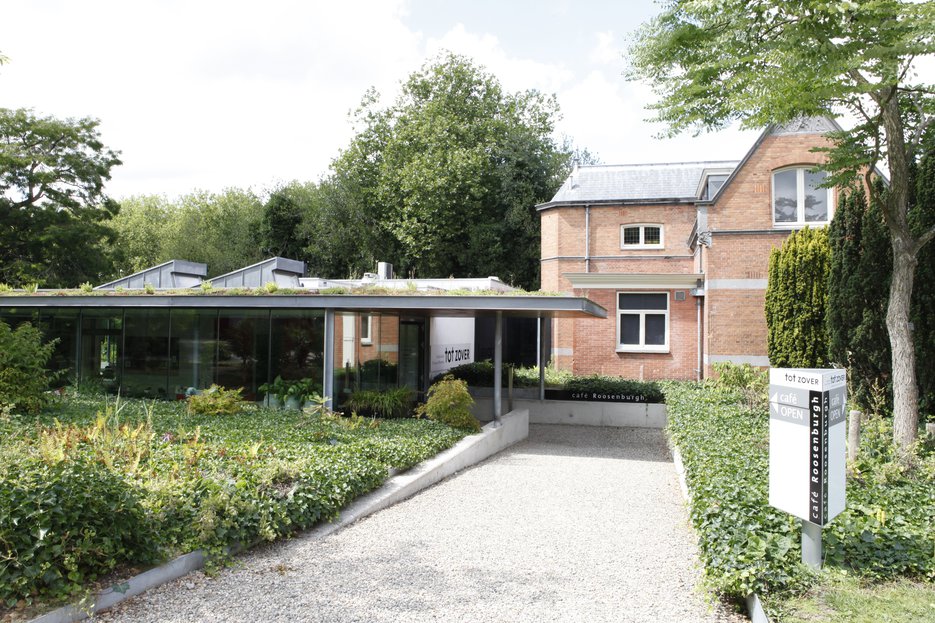
Most countries keep their dead out of sight. The Netherlands does not, entirely. Just inside the main gate of De Nieuwe Ooster, the municipal cemetery of Amsterdam, stands a small museum that makes the country's relationship with death visible: Museum Tot Zover. Its own tagline is het museum over leven & dood — the museum about life and death — and the question it puts at the centre of everything it does is a plain one: Hoe gaan we om met de dood? How do we deal with death?
The museum, briefly
The Nederlands Uitvaart Museum Tot Zover opened on 19 December 2007. It occupies the former residence of the cemetery director, a nineteenth-century house by the Amsterdam city architect A.W. Weissman (better known for the Stedelijk Museum), with a small modern entrance wing added. The collection it shows belongs to a separate foundation, the Stichting Funerair Erfgoed.
The collection holds more than 2,000 objects related to funerary art, the history of funerals and present-day funeral culture in the Netherlands. The permanent presentation takes visitors through three themes — afscheidsrituelen (farewell rituals), het dode lichaam (the dead body) and rouw en herinnering (mourning and remembrance) — and the museum publishes a "Top 13" of its collection online. It is a good indication of the range: a painted rouwbord (mourning board) from 1758, once hung at the house of the deceased; the Portret van een overleden jongen by Otto van Veen, from 1584, the earliest known post-mortem portrait from the Low Countries; a bouquet made entirely of human hair from 1871; nineteenth-century black mourning tableware; death masks; a 1935 film promoting cremation; and a collection of more than 250 scale-model hearses. Not everything is historical. Doodleuke Bingo, a game from 2022 that asks players questions about farewell and loss, is on the same list as the mourning board.
In the museum corridor, a permanent presentation called Laatste Levensfase (the last phase of life) shows three photo series about how people live towards their death and what the people around them do.
Temporary exhibitions change through the year. From 17 September 2026 to 21 March 2027, for example, the museum shows Mourning Traffic by Anne Cappendijk, an installation of traffic signs about grief after the sudden death of her father, and Mijn verdwijnende vader by Rob Looman, sculptures, paintings and drawings made in response to his father's Alzheimer's. Current exhibitions are listed on totzover.nl.
The programme around it
Around the exhibitions the museum runs a programme of its own:
- Lectures and events. Coffee-and-cake lectures with writers and thinkers on Sunday afternoons, book presentations and smaller events. Most are in Dutch.
- Funeraire Academie. A platform where science and the funeral sector meet, with symposia (the next one, Mors Neerlandica, is on 28 October 2026), an interview series on funeral research, an online database of theses on death, grief and funeral culture, and a podcast, De Podkist.
- Education. Programmes for primary schools (Pluk de dag! and Afscheid van een huisdier, on saying goodbye to a pet), guided tours for secondary schools, vocational colleges and teacher training, and Doodgewoon in de Klas, online teaching material with guest speakers.
- For children and families. Admission is free up to age 12. The museum's librarian keeps a list of children's books about death and grief, sorted by age from 3 to 18, and the website offers a template for making a small coffin when a pet dies — for many children the first death they meet.
- Guided tours of the museum. Bookable on request, €75 per group on top of admission.
The cemetery: De Nieuwe Ooster
The museum sits inside a walkable park. De Nieuwe Ooster opened on 1 May 1894, to a design by the landscape architect Leonard Springer, who had won the city's competition for it two years earlier. His brief to himself still reads well: a cemetery, he wrote, must not be gloomy and melancholy, so that people are not afraid to visit. The grounds now cover 33 hectares, have been a rijksmonument (national monument) since 2003, and double as an arboretum, with 38 kinds of oak and 68 kinds of maple among roughly a thousand tree species. Seventeen grave monuments have heritage status of their own and are maintained under a programme the cemetery calls the Stenen Archief van de Stad, the stone archive of the city.
The cemetery keeps its own list of notable graves: the poet Jacques Perk, the portrait painter Thérèse Schwartze, Westerman, the founder of the Artis zoo, the organist Feike Asma, the entertainer Jos Brink, the rock musician Wally Tax. The physicist and Nobel laureate Johannes Diderik van der Waals is buried here, as are the painters George Breitner and Willem Witsen. There are also more than 300 Commonwealth war graves from the Second World War, in the south-eastern part of the grounds, and Dutch war monuments; each year around 3 May the cemetery runs a war-graves walk, and on 4 May the city holds its commemoration here.
The park is open every day: Monday to Friday from 8:00 to 17:00, and on Saturdays, Sundays and public holidays from 10:00 to 17:00. Entry is free. A free audio walk, about 90 minutes long and in Dutch, can be downloaded from denieuweooster.nl; it starts at the main entrance on the Kruislaan and ends at the graves of Breitner and Witsen. On the first Sunday of each month at 13:00, volunteers of the Stichting Arboretum De Nieuwe Ooster lead a two-hour walk through the tree collection, starting at the museum café (€5; children 8 to 14 €2.50; registration at denieuweoosterbomenpark.nl). The cemetery itself gives guided tours to groups on request.
One date is worth knowing for anyone who has lost someone. On the last Sunday of every month, from 11:00 to 13:00, the cemetery hosts a free bijeenkomst voor nabestaanden (gathering for the bereaved) in the museum café, with registration by email. And on 1 November, around Allerzielen, the municipal cemeteries hold the Tuin voor Alle Zielen, an afternoon of remembrance open to everyone.
Why visit
- To start a conversation that has no natural place to start. A museum is neutral ground. Nobody has to open the subject; the exhibition does it. Going with a partner or adult children, and talking in the café afterwards, is one of the simplest ways to begin the conversation the rest of this journal is about.
- To see that customs change. A mourning board from 1758 next to a bingo game from 2022 makes one thing clear: there is no fixed way to do this. What you choose for yourself — burial or cremation, a ceremony or none, a church or a field — is yours to choose.
- If you are grieving. The park, the café and the monthly gathering for nabestaanden are there regardless of the museum. You do not need a ticket for any of them.
- With children. Admission is free up to 12, the book list is sorted by age, and the material is shown as it is, without drama.
A practical note
At the time of writing (October 2026), Museum Tot Zover is open Tuesday to Sunday, 11:00 to 17:00, and closed on Mondays. Admission is €11 for adults and €6 for young people aged 13 to 18 and students; children up to 12 and holders of a Museumkaart, I amsterdam City Card or Stadspas go free. The museum and the café take card payments only. Current prices and opening days are on totzover.nl.
The address is Kruislaan 124, 1097 GA Amsterdam, in the Watergraafsmeer in Amsterdam-Oost. By public transport from Amsterdam Centraal, take the train to Amsterdam Amstel, then bus 40, 320 or 327 to the Kruislaan stop, two minutes' walk from the museum; Amsterdam has roadworks and diversions through 2027, so check 9292.nl before you go. By car, there is free parking at Rozenburglaan 5, by the cemetery office, during office hours (Monday to Friday 8:00–16:30, weekends 10:00–16:30), about ten minutes' walk through the park; the residential streets opposite the main gate have paid parking, free on Sundays. The ground floor of the museum, including the café, is step-free; the upper rooms are reached by a lift. Guide dogs are welcome throughout, other dogs in the café only.
Café Roosenburgh, run since 2007 by De Nieuwe Ooster and the museum together and staffed by volunteers from the neighbourhood, serves coffee, tea, cake, soup and tosti's, with a shaded terrace in good weather. It keeps the museum's hours and is open to everyone, with or without a ticket.
In the app
Museum Tot Zover is independent of everly. We mention it because it is one of the few public places in the Netherlands where death is simply a subject — looked at, talked about, with coffee afterwards — and because that is where preparing for it tends to begin. If you spot something here that is out of date, tell us at contact@everly.one.
Closed beta — access by invitation.
Sources
- Museum Tot Zover — tickets and opening hours, address and route, Café Roosenburgh, museum for children. https://www.totzover.nl/bezoekersinformatie/
- Museum Tot Zover — exhibitions and events, Top 13 of the collection, book tips, Funeraire Academie, education, about the museum. https://www.totzover.nl
- De Nieuwe Ooster — opening hours, route and parking, history of the park, notable graves, audio tour, agenda, tours on request. https://www.denieuweooster.nl
- Stichting Arboretum De Nieuwe Ooster — monthly guided walks. https://denieuweoosterbomenpark.nl/rondleidingen/
- Commonwealth War Graves Commission — Amsterdam New Eastern Cemetery. https://www.cwgc.org/find-a-cemetery/cemetery/2059200
- Wikipedia — Museum tot zover (opening date, building) and De Nieuwe Ooster (rijksmonument, arboretum, notable graves). https://en.wikipedia.org/wiki/Museum_tot_zover